On-Demand Hot Water Without Storage Limits
Tankless Water Heaters in Rincon and the Low Country area for continuous supply and mineral clogging prevention
Tankless water heaters heat water on demand rather than storing preheated water in a tank, but hard water in the Rincon and the Low Country area requires descaling protocols to prevent mineral buildup inside the heat exchanger. PG Custom Plumbing & Water Filtration installs tankless systems with proper gas line sizing, code-compliant venting, and descaling port access for annual flush maintenance across Rincon and the Low Country area. Without regular descaling, mineral deposits reduce flow rate and heating efficiency in systems operating in Rincon and the Low Country area water conditions.
Installation starts with assessing your home's gas supply capacity and water hardness level, then sizing the tankless unit based on peak flow demand and climate-adjusted temperature rise. Gas lines are installed or upgraded to meet the unit's BTU requirements and local code, and venting is routed to handle coastal humidity exposure without premature deterioration.
Request a flow demand assessment to determine the correct tankless unit size for your household usage.
Why Tankless Efficiency Depends on Descaling Protocol
Tankless units are sized by calculating simultaneous fixture use and the temperature rise needed to reach your target hot water temperature, with installation including gas line verification and venting that meets manufacturer clearance specifications. A descaling port is installed with isolation valves so the heat exchanger can be flushed annually without disconnecting gas or water lines, and customers receive a maintenance schedule based on local water hardness to prevent mineral clogging before it reduces performance. Coastal humidity affects vent pipe longevity, so vent material selection matches exposure conditions.
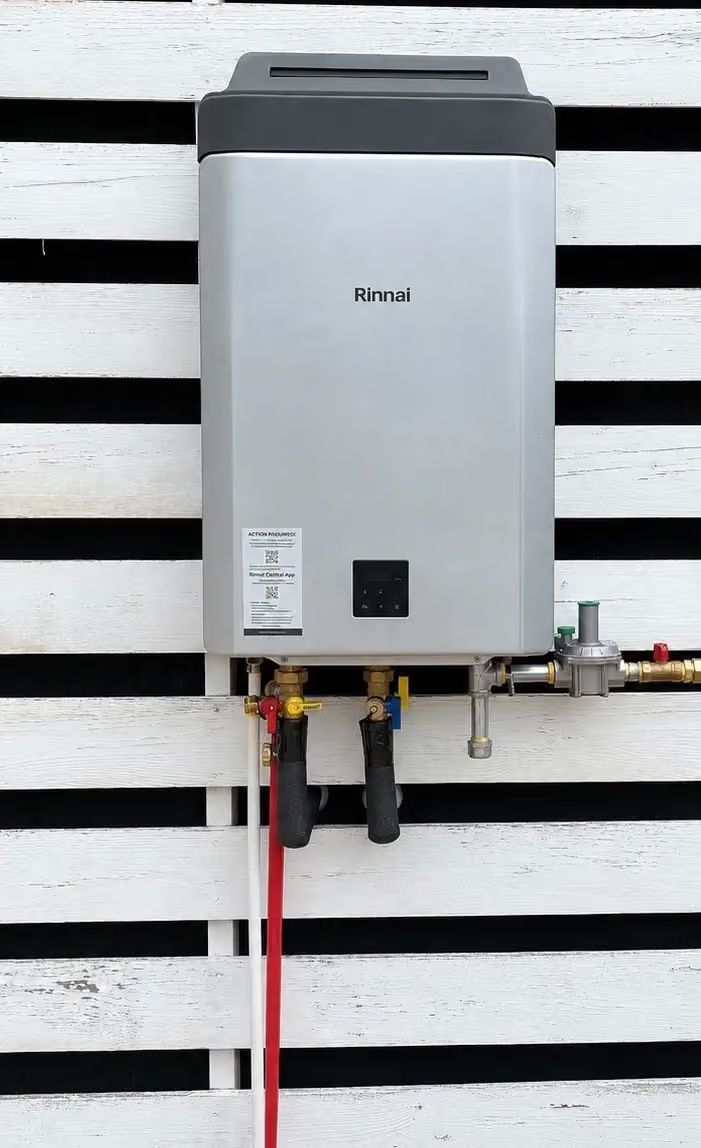
Once the system operates, you notice hot water availability no longer depends on tank capacity, multiple fixtures can run simultaneously without temperature drop, and energy use decreases because water is not kept heated during periods of no demand. The unit mounts on the wall and eliminates the floor space required by traditional tank heaters.
Tankless installations in homes with existing tank heaters may require gas line upgrades because on-demand heating demands higher BTU input than storage tank burners. Annual descaling flushes remove calcium and magnesium deposits before they restrict flow or overheat the heat exchanger, and systems installed without descaling ports require unit removal for maintenance.
Common Questions About This Service
Tankless water heater performance depends on proper sizing, gas supply capacity, and regular descaling in hard water areas like Rincon and the Low Country area.
How is a tankless water heater sized for a specific home?
Sizing calculates peak flow demand by adding the flow rates of fixtures that may run simultaneously, then matching a unit capable of heating that volume to your target temperature. Climate affects sizing because colder incoming water requires more BTU capacity to reach the same output temperature.
What does the descaling port installation provide?
The descaling port includes isolation valves that allow a pump to circulate descaling solution through the heat exchanger without disconnecting water or gas lines. This setup makes annual maintenance faster and prevents mineral buildup from clogging the unit.
Why does hard water in the Rincon and the Low Country area require annual flushing?
Water hardness accelerates calcium and magnesium deposits inside the heat exchanger, and without annual descaling, these minerals restrict water flow and reduce heating efficiency. Hard water areas require proactive flushing schedules to maintain tankless performance.
What gas line upgrades are needed for tankless installation?
Tankless units require higher BTU input than tank heaters, so gas line diameter and pressure may need upgrading to deliver adequate fuel flow. Installation includes verifying gas supply capacity and upgrading lines if existing infrastructure cannot meet unit demand.
When should I schedule descaling maintenance after installation?
The first descaling flush is recommended within twelve months of installation, then annually based on water hardness and household usage. Systems operating in high-hardness areas may require more frequent flushing to prevent mineral clogging.
PG Custom Plumbing & Water Filtration installs tankless systems with annual flush protocols that match local water chemistry and usage patterns. Schedule an installation consultation to review gas supply requirements and sizing for your home.